
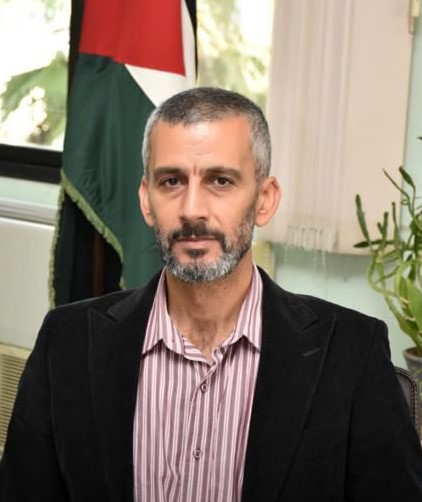
 Dr Hussein Sababha / Head of Dept.
The Department of Conservation and Management of Cultural Resources at the Faculty of Archaeology and Anthropology was established in 1999, aiming at keeping pace with the ongoing development in the field of conservation of cultural heritage. The department offers a bachelor's program in Conservation and Management of Cultural Resources, and three master's programs: the Management of Cultural Resources, the Conservation of Cultural Heritage and Archaeometry. In addition, the department organizes training programs that combine theoretical and practical aspects in these fields. The Department of Conservation and Management of Cultural Resources has managed to establish an extensive network of cooperation relationships with national and international institutions that share similar research and teaching interests.
Vision
Preparing qualified professionals capable of safeguarding Jordan’s cultural heritage and utilizing it to achieve sustainable development.
Mission
Providing high-quality, student-centered education that emphasizes practical training, scientific research, and field projects aimed at preserving cultural heritage.
Objectives
The Bachelor’s Program in Conservation and Management of Cultural Resources aims to equip students with:
1. Research, analytical, deductive, and logical problem-solving skills, including the ability to identify issues and propose appropriate solutions.
2. Communication skills, dialogue and acceptance of others, critical thinking, information evaluation, teamwork, and active participation in social and volunteer fields.
3. An understanding of tangible and intangible cultural heritage, its associated values, its significance, and ways to utilize it for the benefit of society.
4. Knowledge of the fundamentals and methodologies of archaeology, anthropology, and heritage conservation and management.
5. An understanding of past civilizations through the study of archaeological remains and the people who produced them, and the ability to apply this understanding to the present and future.
6. Knowledge of the nature of heritage and archaeological materials as well as the causes and mechanisms of their deterioration.
7. Skills in documenting, examining, and diagnosing cultural heritage.
8. Familiarity with the procedures, methods, and techniques of preventive and interventive conservation of cultural heritage.
9. Knowledge of the tools, equipment, instruments, and materials used in heritage conservation processes.
10. Understanding of the basic principles of interpreting, presenting, and managing cultural heritage.
Program Learning Outcomes
Upon successful completion of the Bachelor’s Program in Conservation and Management of Cultural Resources, graduates are expected to be able to:
1. Apply the knowledge acquired in research, analysis, and problem-solving.
2. Communicate effectively with others and work efficiently within a team.
3. Use acquired concepts to raise awareness of the importance of cultural heritage in society.
4. Explain the fundamentals, concepts, and methods of archaeology, anthropology, and cultural heritage conservation and management, and apply them to present and future contexts.
5. Describe the composition of heritage and archaeological materials and explain the causes and mechanisms of their deterioration.
6. Identify and apply appropriate techniques for documenting, examining, and diagnosing various types of cultural heritage.
7. Identify and apply suitable methods, procedures, techniques, equipment, and materials for interventive conservation of cultural heritage.
8. Identify and apply preventive conservation measures and procedures for different heritage and archaeological materials.
9. Discuss and evaluate the means and methods of interpreting, presenting, and managing cultural heritage.