
‘Ain Ghazal Statues (7th Millennium BC)
The oldest statues ever crafted by human hands.
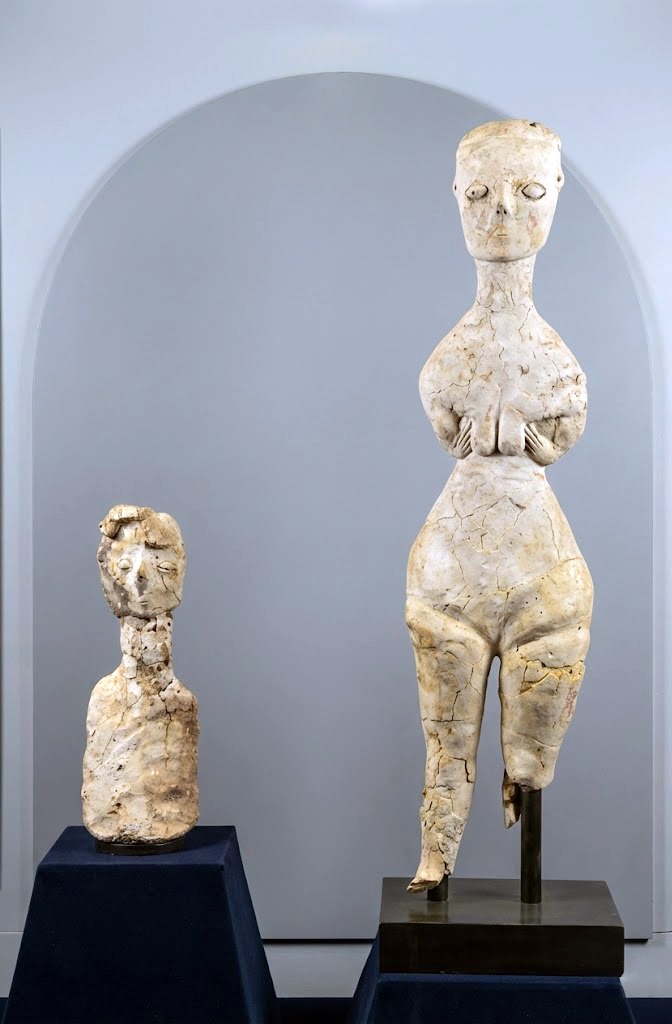 The ‘Ain Ghazal statues are the oldest known statues made by humans, dating back to the period between 8000–6000 BC. This era stands as a testament to the great innovation and creativity of the Jordanian people of that time.
Discovered at the ‘Ain Ghazal archaeological site near the capital, Amman, these statues were found amidst the remains of a Neolithic village. At this site, humans produced the first-ever man-made material: plaster. This was achieved through complex chemical reactions, involving the transformation of limestone into plaster.
Key Highlights of the Discovery:
-
Technological Breakthrough: The inhabitants of ‘Ain Ghazal mastered the art of heating limestone to high temperatures to create lime plaster, which was then molded over bundles of reeds.
-
Artistic Detail: The statues are famous for their expressive eyes, often outlined with bitumen (natural asphalt) or inlaid with shells, giving them a hauntingly lifelike appearance.
-
Global Significance: These figures represent the transition from nomadic life to settled, organized societies with shared artistic and spiritual beliefs.