
Burial Jars in a Sahab Cave
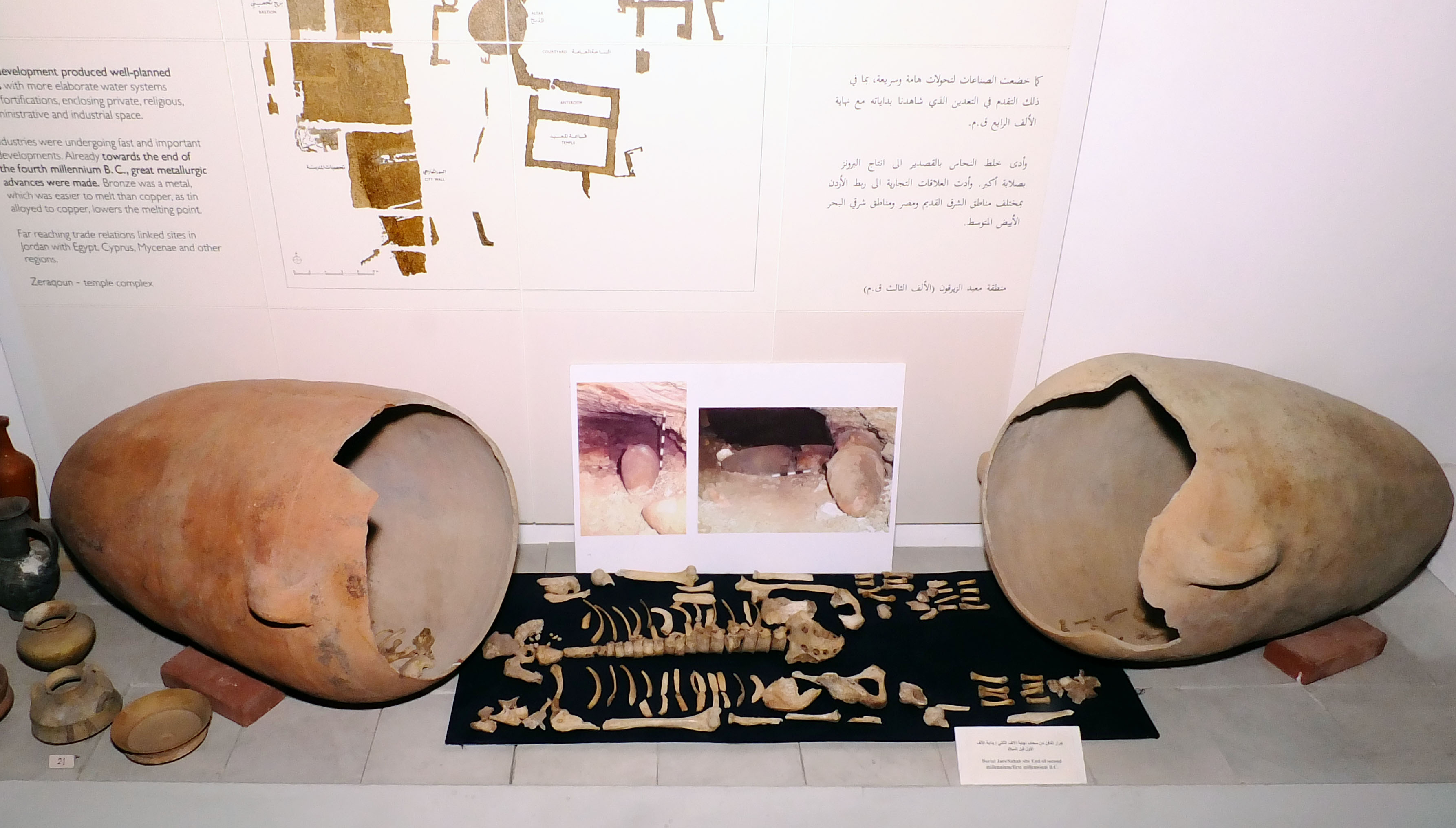
During the Late Bronze Age III and the beginning of the Iron Age (early 12th century BC), the custom of burying adults in jars persisted. The deceased was typically buried using two large jars whose necks were broken at the shoulder. The body would be placed inside the two jars, which were then joined shoulder-to-shoulder, and the opening between the two broken necks was sealed with a stone or a large shard from another jar.
These burial jars were placed in caves, which were the most common form of burial during the Iron Age, particularly in mountainous regions where caves are abundant. This was evidenced by archaeological excavations at the Sahab site. In one of the Sahab caves, eight large pottery jars with broken necks were discovered, containing the skeletal remains of adults, along with a small jar containing an infant burial. Some of the bones showed signs of burning, possibly indicating the practice of cremation. Funerary offerings found within these jars included bronze and iron bracelets, rings, and daggers. Two wooden coffins were also found in the same cave; one belonged to a warrior, buried with a dagger by his side, while the second was for a child.